For global buyers, choosing the right Mens Tie Clip involves more than selecting a shiny accessory. It requires attention to function, proportion, material, and regional style preferences. A clip that looks elegant on a narrow silk tie may appear oversized on a knitted tie. Small details matter.
Menswear author Alan Flusser offers a useful principle: “Good style depends on proportion, restraint, and detail.” This idea applies directly to tie clips. Classic bar clips suit formal uniforms and corporate wardrobes. Spring-loaded clips provide stronger grip for daily wear. Chain-style designs create a traditional appearance, while magnetic models offer a cleaner look with fewer visible parts. Each type serves a different buyer.
Material selection also deserves careful review. Stainless steel offers durability and consistent color. Brass can provide a warmer, vintage appearance, but its finish may change over time. Silver-toned plating looks refined, yet weak coating can scratch during packaging or shipping. Samples should be checked under natural light. Test them on different tie widths.
There is no universal best choice. That is the difficult part. Buyers must balance appearance, cost, packaging, and long-term use. Some suppliers focus heavily on polished surfaces and overlook spring tension. Others offer attractive boxes but inconsistent clip alignment. These weaknesses are easy to miss in catalog images.
This guide compares the leading Mens Tie Clip types for global buyers. It considers practical performance, visual character, and sourcing concerns. The conclusions are useful, but not perfect. Buyer testing remains essential.
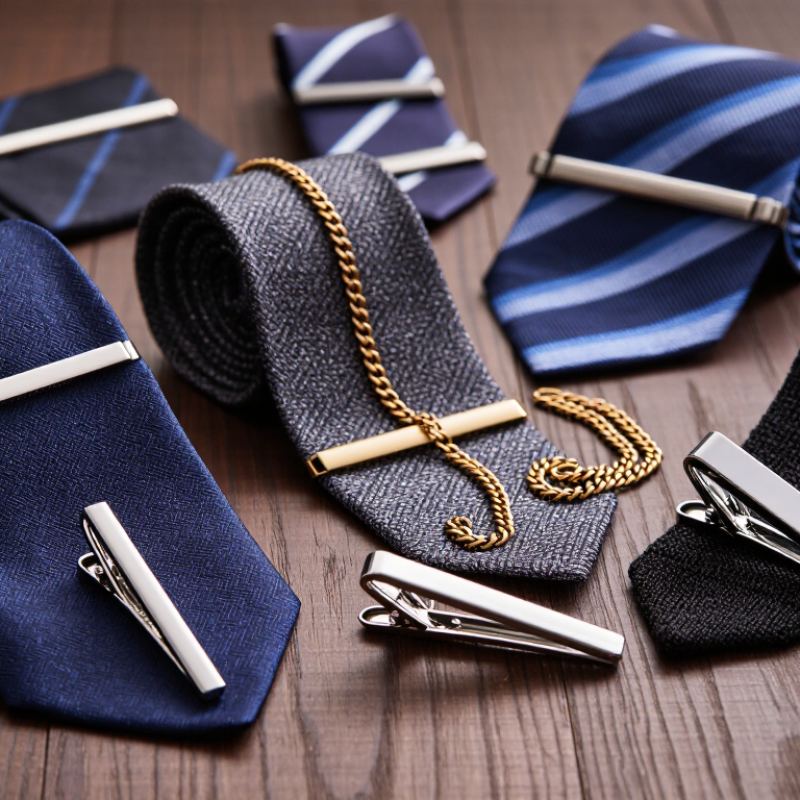
A men’s tie clip is a small metal accessory that secures a tie to the shirt front. It prevents swinging, twisting, and accidental movement during daily wear. Common types include slide bars, spring-loaded clips, and decorative tie bars. Each design offers a different balance between grip, appearance, and production cost. A reliable clip should hold the fabric firmly without leaving deep marks. Its edges should feel smooth against the shirt.
For most standard neckties, a width of 1.5–2.5 cm offers a practical balance. This size provides enough contact for stability while keeping the accessory visually neat. Narrow clips suit slim ties, while wider clips work better with heavier fabrics. The measurement is useful, but it is not absolute. A 2.0 cm clip may look correct on paper yet feel too heavy after attachment. Buyers should test the clip with several tie thicknesses, not only a flat sample. Check the spring tension, plating consistency, hinge movement, and surface finish under clear lighting. Small defects become obvious during repeated handling.
Tips: Match the clip width to the tie, not only the catalog drawing. Test at least three fabric weights. Ask for dimensional tolerances and material details before approval. Packaging also deserves attention; loose clips can scratch one another in transit. A common mistake is judging appearance first. Function should lead. Reflection matters too: the most attractive design may fail if its grip weakens after repeated opening and closing.
A classic tie bar has a flat body and holds the tie against the shirt. Stainless steel adds strength. Check spring tension carefully. A loose bar may slide during movement.
Slide clips use a simpler structure and may lack a hinged spring. They feel clean and practical. Inspect the corners. Sharp edges can catch delicate fabrics.
Confirm the chain length, attachment strength, and metal consistency. Test the connection gently. A traditional appearance does not guarantee durable construction.
Magnetic clips offer quick placement and simple removal. They suit users who dislike complicated fastening. However, weak housings can reduce magnetic performance.
A 45 mm clip suits ties about 50–60 mm wide. A 50–55 mm clip fits ties around 65–75 mm wide. Wider ties may need 56–60 mm clips.
It is a useful guide, not a perfect rule. Thick wool, layered knots, and slippery silk can change the fit. Test the clip on a tied shirt. Table testing can mislead.
Request exact length, usable grip length, metal thickness, and spring tension. Ask for material details and care instructions. Samples are essential. Photos hide pressure marks and uneven plating.
Ask about base metal, plating layers, coating thickness, and adhesion testing. Review the finish under daylight. Request current third-party nickel release reports matched to the actual product batch.
Request separate quantities for each finish, design, and packaging option. Confirm setup fees and inspection samples. A trial order is safer than a large commitment.
Packaging should protect polished surfaces from scratches. Use separated pieces or protective sleeves. Check the packaging with a sample shipment. It may still need improvement.
A Mens Tie Clip is a practical accessory that secures a necktie to the shirt, helping maintain a neat and professional appearance. Most tie clips use a standard width of approximately 1.5–2.5 cm, while common designs include classic tie bars, slide clips, tie chains, and magnetic clips. Each style offers a different balance of appearance, holding strength, and ease of use for business, formal, or everyday wear.
For global buyers, material and sizing are important considerations. Stainless steel provides durability and corrosion resistance, while brass, silver, and gold-plated finishes offer different visual effects and price levels. Tie clip lengths of 45–60 mm can accommodate various tie widths without overwhelming the tie. Buyers should also evaluate plating consistency, nickel compliance, packaging requirements, production quality, and MOQ terms to ensure reliable sourcing and consistent product performance.

 JinJie Arts & Crafts