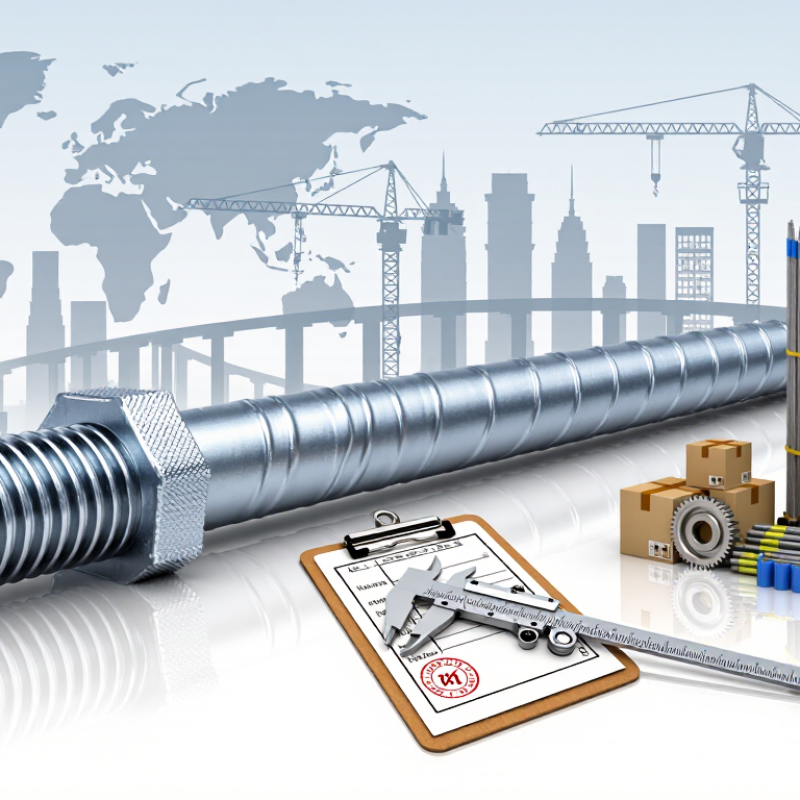
Selecting the right Tie Bar manufacturer is a practical engineering decision, not a simple catalogue exercise. Global buyers must examine steel grade, thread accuracy, coating quality, load performance, and delivery consistency. These details matter on busy construction sites, where a damaged thread can delay formwork assembly and increase labor costs.
Formwork consultant Michael Schaeffer states, “A dependable Tie Bar begins with traceable steel, not a polished catalogue photograph.” His point deserves attention. Factory audits, mill certificates, dimensional reports, and independent testing provide stronger evidence than attractive product images. Reliable manufacturers should also explain their production tolerances, packaging methods, inspection procedures, and response times for technical questions.
This 2026 guide reviews leading Tie Bar manufacturers serving international buyers. It considers product quality, manufacturing capacity, customization, export experience, certifications, and after-sales support. It also examines practical details, such as thread protection, bundle labeling, rust prevention, and container loading.
No ranking is perfect.
A supplier may perform well in one region but struggle with smaller orders or unfamiliar standards. Buyers should therefore compare manufacturers against project-specific requirements. A highway project may prioritize high-volume delivery, while a commercial building may need customized lengths and rapid technical support. Pricing also requires caution. The lowest quotation can hide inconsistent dimensions, weak packaging, or replacement delays.
This guide aims to provide a clear starting point. It does not replace engineering verification, supplier audits, or sample testing. Careful buyers should request current documentation before making a final purchasing decision.
A reliable tie bar manufacturer makes quality visible before production begins. They should provide precise drawings, metal specifications, plating details, and sample approval records. For a tie bar, small differences matter. Uneven teeth can damage fabric, while weak springs may loosen after repeated use. Experienced buyers should request tolerance data, coating test results, and photographs from actual production lines. Clear communication matters too. A delayed reply often predicts delayed corrections.
The International Organization for Standardization’s annual certification survey records more than one million ISO 9001 certificates worldwide. However, certification alone does not prove dependable workmanship. Buyers should check whether the factory connects its quality system with incoming inspection, assembly checks, and final sampling. I have found that simple traceability can reveal more than polished presentations. Batch numbers, inspection dates, and operator records create useful evidence.
Logistics deserve equal attention. UN Trade and Development’s Review of Maritime Transport reports that over 80% of global merchandise trade by volume moves by sea. Therefore, a reliable manufacturer should explain packaging strength, carton dimensions, shipping terms, and contingency plans. Ask how they handle damaged cartons or inconsistent quantities. The answer may be imperfect. That is acceptable. Evasive answers are not. A factory should also confirm realistic lead times, not the fastest promise. For global buyers, dependable updates, repeatable samples, and honest limitations often matter more than the lowest quotation.
Request precise drawings, metal specifications, plating details, and approved sample records. Photos should show actual production, not only polished catalog images. Details matter.
Ask for tolerance data, coating test results, and photographs of inspection areas. Check tooth alignment, spring strength, surface finish, and sharp edges. Small defects can damage fabric or cause loosening.
No. Certification supports a quality system, but it does not guarantee consistent workmanship. Check incoming inspection, assembly checks, final sampling, and corrective-action records. Paperwork is not enough.
Request batch numbers, inspection dates, operator records, and sample approval details. These records can connect defects to specific production stages. They reveal more.
Ask whether plating, polishing, or packaging happens inside the factory. If plating is outsourced, confirm the partner, testing method, and responsibility for defects. Hidden outsourcing can affect color and delivery.
Confirm metal composition, coating requirements, sharp-edge controls, packaging materials, and destination-market documents. Request laboratory reports for nickel release, corrosion resistance, or restricted substances. Reports must match the ordered alloy and finish.
Approve carton dimensions, gross weight, inner protection, and shipping terms before production. Loose pieces may scratch each other inside one carton. Use dividers, sealed samples, and independent inspection for larger orders.
Ask for realistic lead times, capacity evidence, and a recovery plan for delays. A slower honest estimate is safer than the fastest quotation. My checklist once missed packaging damage, so review every shipment carefully.
Choosing the best Tie Bar manufacturer in 2026 requires more than comparing product catalogs or quoted prices. Global buyers should assess material quality, finishing consistency, product durability, customization options, minimum order quantities, production capacity, and lead times. A reliable manufacturer should communicate clearly, provide accurate samples, maintain stable quality control, and support both standard and custom designs. Evaluating these factors helps buyers identify suppliers that can meet different market needs while offering a practical balance of quality and cost.
International sourcing also depends on compliance, packaging, shipping reliability, and supplier verification. Buyers should review business qualifications, production capabilities, inspection procedures, export experience, and documentation before placing large orders. Comparing manufacturers by service responsiveness, payment terms, logistics support, and after-sales communication can reduce supply risks. By taking a structured approach to research and verification, global buyers can select a dependable Tie Bar manufacturing partner capable of delivering consistent products, flexible customization, competitive pricing, and reliable long-term cooperation.

 JinJie Arts & Crafts